Return to full image
 xxx xxx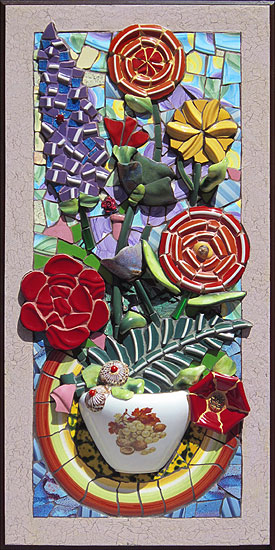 |
xxxxxxxxxxxxxxxxxxxxxxxxxxxxxxxxxxxxxxxxxxxxxxxxxxxxxxxx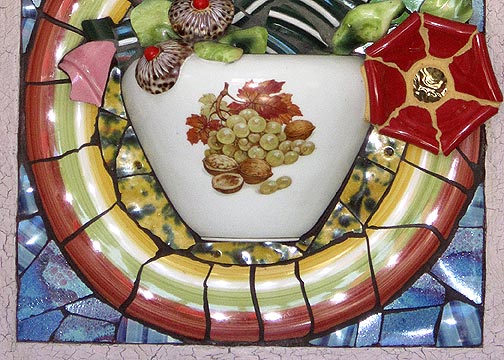 |
|
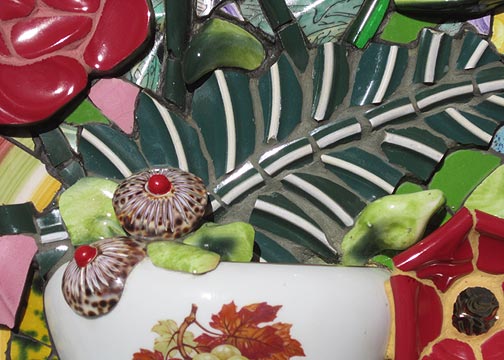
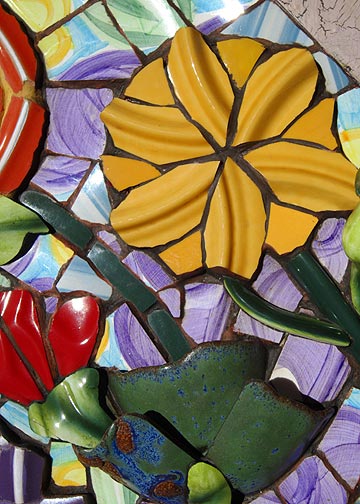
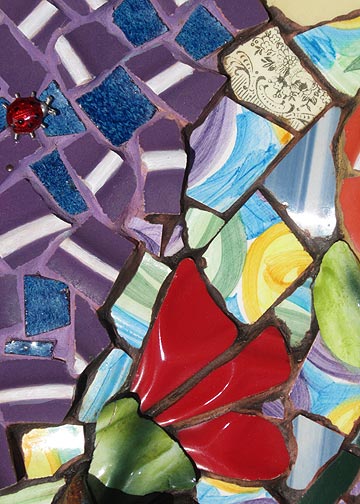
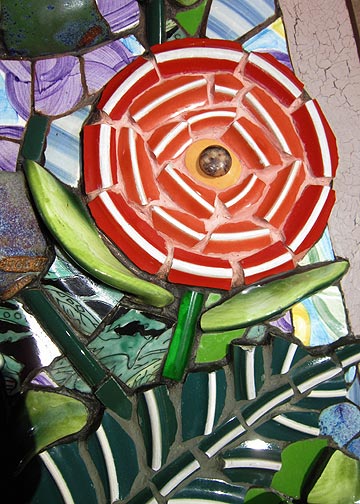
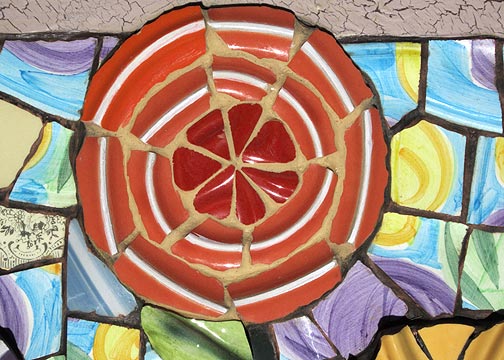
The wonderful thing about mosaics, especially mosaics composed of pieces that are not flat, is that they change with the light. Their dancing reflections and specular highlights break up the surface, which differentiates them from flat paintings and is part of what makes the extra labor aesthetically worthwhile. Much of my art explores the balance between the integration and disintegration of the image; in mosaics, much of the disintegration is provided by the reflections. Unfortunately, neither this balancing act nor their dynamic aspect can be captured for the entire artwork in one photograph. The photograph on the right, above, however, shows how the highlights "break up" the bottom part of the image.
In the home, mosaics should be hung where they dynamically interact with bright, direct light. This is useful, because these are often the locations where other art works might be damaged over time from excess light, or suffer from annoying glare off the picture glass. Mosaics are also good choices for bathrooms, as they are not damaged by humidity, and kitchens, because they can usually be cleaned with soap and water. |
|
 |
 |
 |
 |
 |
|